Heat Stress Assessment Bangladesh.
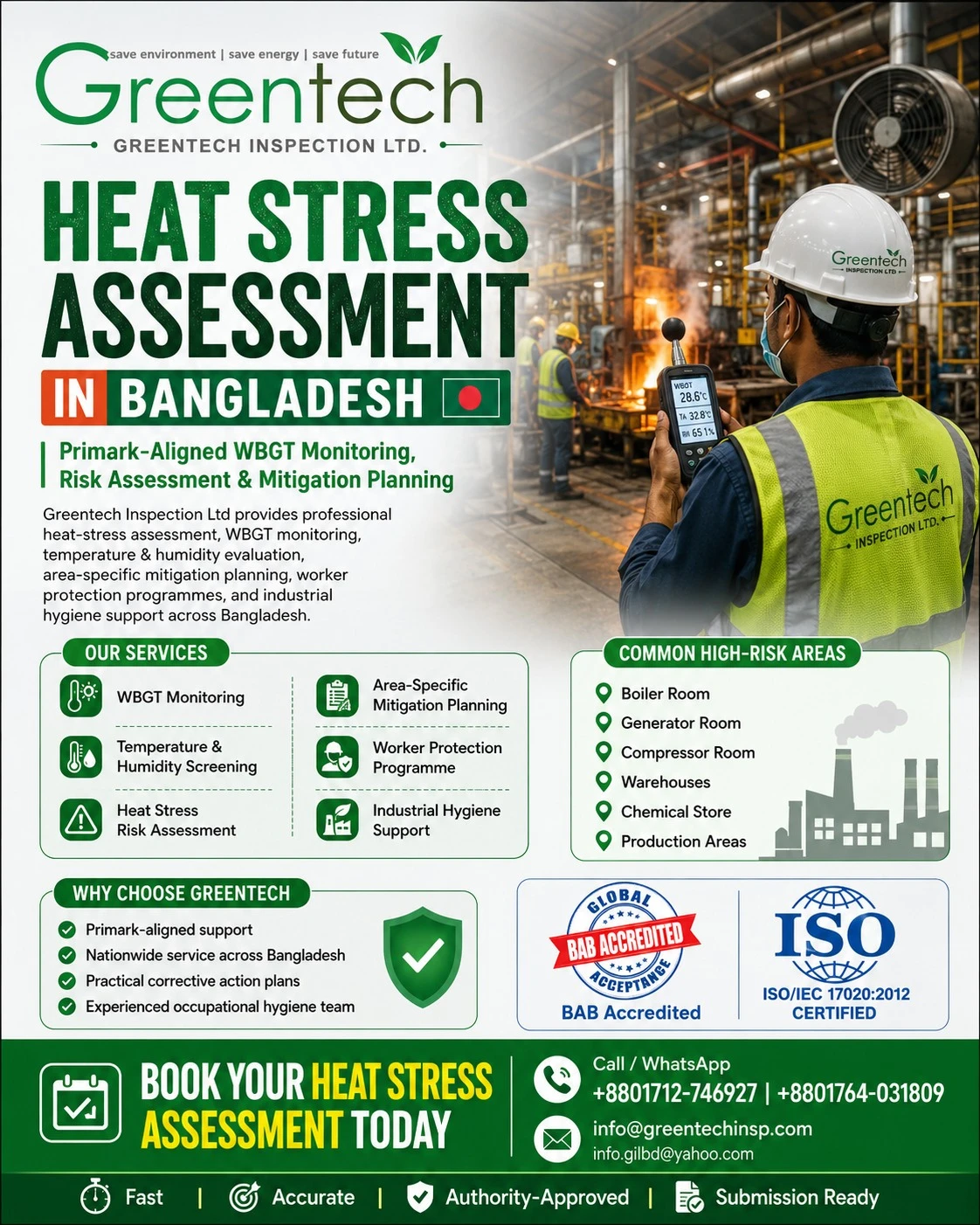
Primark-Aligned WBGT Monitoring, Risk Assessment & Mitigation Planning.
Looking for Heat Stress Assessment services in Bangladesh? Greentech Inspection Ltd provides Primark-aligned heat-stress risk assessment, WBGT monitoring, temperature and humidity evaluation, area-specific mitigation planning, worker protection programmes, and industrial hygiene support across Bangladesh.
Heat Stress Assessment in Bangladesh
Heat stress is a significant occupational health and safety concern in factories, warehouses, boiler rooms, generator rooms, utility areas, production floors, construction sites, and other hot working environments.
A workplace may experience heat stress when workers are exposed to a combination of:
High air temperature
High relative humidity
Radiant heat from machinery or hot surfaces
Limited ventilation
Physical workload
Long exposure duration
Protective clothing or PPE
Inadequate rest and hydration
Personal health or acclimatization factors
Greentech Inspection Ltd provides professional Heat Stress Assessment services in Bangladesh, including temperature and humidity screening, task-based WBGT assessment, area-specific risk prioritization, mitigation planning, worker-protection programmes, and Primark-aligned heat-stress management support.
The recommendations in this blog are based on a detailed Heat Stress Assessment report prepared by Greentech Inspection Ltd for a garment-accessories manufacturing facility in Gazipur.
Heat Stress Assessment for Primark Supplier Factories
Primark supplier factories are expected to maintain a safe and hygienic workplace and take suitable steps to prevent harm to workers.
A Primark-aligned heat-stress programme should include:
A documented heat-stress risk assessment
Identification of high-exposure work areas
Assessment of vulnerable workers
Appropriate engineering and administrative controls
Clean and accessible drinking water
Regular and recorded worker training
Health checks for high-risk workers
Medical assistance for heat-related illness
Evidence that corrective actions are implemented
Ongoing monitoring and verification
The reviewed report notes that publicly available Primark documents do not establish a single numerical dry-bulb temperature, relative-humidity, or WBGT limit. Therefore, internal priority bands should not be presented as official Primark limits.
Factories should obtain the latest Primark heat-stress guidance directly from their Primark contact and update their risk assessment when new buyer-specific requirements are issued.
What is Heat Stress Assessment?
A Heat Stress Assessment is a structured evaluation of workplace heat exposure and its potential effects on worker health, safety, productivity, and operational performance.
A complete assessment may evaluate:
Dry-bulb temperature
Relative humidity
Wet Bulb Globe Temperature
Radiant heat
Air movement
Worker workload
Clothing and PPE
Exposure duration
Work-rest arrangements
Hydration facilities
Ventilation and cooling systems
Worker symptoms and complaints
Emergency medical readiness
The purpose is to identify heat-related risks and develop practical measures to prevent heat exhaustion, heat stroke, dehydration, fatigue, reduced concentration, unsafe behaviour, and productivity loss.
Why Temperature and Humidity Alone Are Not Enough
Temperature and relative humidity are useful screening indicators, but they do not provide a complete occupational heat-stress evaluation.
Actual heat strain may also be affected by:
Worker activity and metabolic workload
Heat produced by machines and industrial processes
Radiant heat from boilers, steam lines, dryers, engines, and hot surfaces
Air velocity and ventilation
Protective clothing
Worker acclimatization
Individual health factors
Duration of exposure
For this reason, task-based WBGT monitoring is recommended for hot areas and higher-risk work activities.
A single temperature reading should not be used to declare an entire factory safe or compliant.
What is WBGT?
WBGT stands for Wet Bulb Globe Temperature.
WBGT is a widely recognized heat-stress screening method because it considers more environmental factors than air temperature alone.
Depending on the workplace, WBGT may reflect:
Air temperature
Humidity
Radiant heat
Natural wet-bulb conditions
Globe temperature
Outdoor solar exposure
WBGT results should be evaluated together with workload, clothing, exposure duration, worker condition, and applicable occupational health guidance.
Example Heat Stress Assessment Findings
In the reviewed facility assessment:
39 work and service areas were evaluated
Recorded temperatures ranged from 30.0°C to 35.5°C
Relative humidity ranged from 58.1% to 70.4%
The average recorded condition was approximately 32.6°C and 60.9% RH
Six areas were recorded at or above 35.0°C
Eight areas exceeded 60% RH
Five areas were recorded at or above 70% RH
Higher-priority conditions were identified in:
Boiler Room
Generator Room
Substation Room
Compressor Room
Fire Pump Room
Bonded Warehouses
Carton Wastage Area
Manual Carton Area
Maintenance Room
Chemical Store
Poly Recycle Room
These results demonstrate why area-specific assessment is necessary. Production, warehouse, service, welfare, and medical areas may have very different heat risks.
Heat Stress Priority Classification
A practical heat-stress programme may classify areas according to urgency.
P1 — Immediate Priority
Typical triggers may include:
Temperature at or above 35°C
Relative humidity at or above 70%
A critical heat-generating service area
Enclosed spaces with poor ventilation
High radiant heat or heavy manual workload
Recommended response:
Immediate interim controls
Task-based WBGT assessment
Restricted access where necessary
Work-rest arrangements
Buddy monitoring
Emergency-response preparation
Engineering-control planning
Suggested timeframe: 0–7 days
P2 — High Priority
Typical triggers may include:
Temperature between 34.0°C and 34.9°C
Relative humidity between 65% and 69.9%
High-workload activity
Hot processes or PPE-intensive work
Recommended response:
Detailed WBGT and workload assessment
Prioritized engineering controls
Improved ventilation and cooling
Worker rotation and exposure reduction
Hydration and rest arrangements
Suggested timeframe: within 30 days
P3 — Moderate Priority
Typical triggers may include:
Temperature between 32.0°C and 33.9°C
Moderate environmental heat without critical process factors
Recommended response:
Improve ventilation
Maintain accessible drinking water
Review workload and work practices
Conduct representative WBGT verification
Monitor peak-hour conditions
Suggested timeframe: 30–60 days
P4 — Routine Monitoring
Typical conditions may include:
Temperature below 32°C
No critical hot-process or workload factor
Recommended response:
Maintain existing controls
Continue temperature and humidity trending
Monitor worker feedback
Reassess after process, layout, weather, or production changes
Suggested timeframe: ongoing
These priority bands are internal action-planning categories. They are not official exposure limits issued by Primark, OSHA, ISO, NIOSH, or another authority.
Heat Stress Risks in Common Factory Areas
Boiler Room
Potential heat sources:
Boiler surface temperature
Steam lines
Steam leakage
Radiant heat
Limited airflow
Possible impacts:
Heat exhaustion
Heat stroke
Dehydration
Burns
Reduced emergency-response capacity
Recommended controls:
Mechanical exhaust
Cool make-up air
Insulation of hot surfaces
Steam-leak repair
Restricted access
WBGT-based work-rest arrangements
Cool recovery area
Emergency medical readiness
Generator Room
Generator rooms may combine:
Engine heat
Exhaust heat
Hot surfaces
High humidity
Combustion emissions
Restricted ventilation
Controls may include:
Verification of exhaust discharge
Mechanical ventilation
Heat insulation
Limited occupancy time
Buddy monitoring
Cool drinking water
WBGT measurement during operating conditions
Compressor Room
Potential risks include:
Continuous compressor heat
Hot pipes and surfaces
High humidity
Condensate
Noise
Limited ventilation
Controls may include:
Mechanical exhaust
Cool make-up air
Surface insulation
Condensate drainage
Restricted exposure duration
Hydration and rest planning
WBGT monitoring
Warehouses
Warehouse heat may be influenced by:
Solar roof gain
Poor air circulation
Limited high-level exhaust
Heavy lifting
Stock movement
Stagnant air
High humidity
Controls may include:
Roof insulation
Reflective roof treatment
High-level exhaust
Low-level make-up air
Mechanical handling aids
Rescheduling heavy work
Cooled rest areas
Water stations
Chemical Store
Heat and humidity may affect:
Chemical stability
Vapour pressure
Container condition
Storage compatibility
Worker inhalation exposure
Controls may include:
Controlled ventilation
Cooling and humidity management
SDS storage-range verification
Proper segregation
Closed containers
Limited worker exposure
Heat and air-quality monitoring
Printing, PVC and Adhesive Areas
In these areas, increased temperature may also increase:
Vapour release
Solvent exposure
Adhesive emissions
Worker discomfort
Headache and reduced concentration
Controls may include:
Local exhaust ventilation
Closed chemical containers
Source capture
Hot-surface insulation
General ventilation
WBGT and indoor-air-quality verification
Facility-Wide Heat Stress Mitigation Programme
A strong factory heat-stress programme should include the following elements.
1. WBGT Survey
Conduct calibrated WBGT measurements in:
High-priority areas
Hottest worker positions
Peak production periods
Peak seasonal heat
High-workload tasks
PPE-intensive activities
The assessment should record:
Workload
Clothing and PPE
Radiant heat
Air movement
Exposure duration
Worker location
2. Interim Heat Plan
The factory should implement immediate controls such as:
Cool potable drinking water
Scheduled recovery breaks
Buddy checks
Symptom reporting
Heat-illness first aid
Emergency transport arrangements
Supervisor response procedures
3. Ventilation Improvement
The factory should review:
General ventilation
Local exhaust ventilation
Mechanical exhaust
Make-up air
Blocked airflow paths
Fan positioning
Heat recirculation
Airflow performance
Hot contaminated air should not simply be recirculated into occupied work areas.
4. Heat-Source Control
Where practical:
Insulate boilers and steam lines
Shield radiant heat sources
Repair steam and hot-air leaks
Insulate engine and compressor surfaces
Enclose hot processes
Capture dryer and process heat
Separate workers from radiant heat
Engineering controls are generally more effective than relying only on worker rotation.
5. Solar Heat-Gain Reduction
For warehouses and upper floors:
Install roof insulation
Apply reflective roof treatment
Improve roof ventilation
Install high-level exhaust
Provide shading
Reduce solar heat transfer through walls and roofs
6. Work-Rest Arrangements
Work-rest schedules should be based on:
WBGT results
Workload
Clothing and PPE
Worker acclimatization
Exposure duration
Worker symptoms
Medical advice
Worker rotation should only be used when it genuinely reduces individual exposure.
7. Acclimatization
New and returning workers may need gradual adjustment to hot work.
A programme may include:
Gradual exposure increase
Closer supervision
Reduced initial workload
Frequent hydration
Symptom checks
Documentation of acclimatization
The report recommends close supervision during the first 7–14 days of hot work.
8. Vulnerable Worker Protection
Confidential occupational-health review may be needed for workers who:
Have reduced heat tolerance
Have experienced previous heat illness
Use certain medications
Have relevant medical conditions
Perform high-exposure tasks
Wear heavy PPE
Work modification should be based on professional medical advice and privacy protection.
9. Continuous Monitoring
Critical rooms may benefit from:
Temperature and RH data loggers
Automated alerts
Daily heat logs
Trend review
Trigger-based WBGT verification
Corrective-action tracking
10. Annual and Trigger-Based Review
The heat-stress risk assessment should be reviewed:
Before each hot season
After process changes
After layout changes
After ventilation upgrades
After a worker complaint
After heat-related illness
After a near miss
When monitoring results worsen
When Primark or legal requirements change
Primark Heat Stress Compliance Evidence
A Primark supplier factory should maintain practical evidence such as:
Area and task heat-stress risk assessments
WBGT reports
Calibration records
Heat-control procedures
Water inspection records
Work-rest schedules
Supervisor logs
Ventilation maintenance records
Worker training records
Acclimatization records
Health-review records
Medical-room readiness records
Incident and symptom logs
Corrective Action Plan closure evidence
Repeat measurement results
Documentation should demonstrate not only that controls exist, but that they are followed and verified.
Monitoring and Verification Plan
Temperature and Relative Humidity
Suggested coverage:
High-priority fixed points
Representative production areas
Warehouses
Utility rooms
Welfare areas
Suggested frequency:
Continuous data logging, or
Start, middle, and end of shift during hot periods
WBGT Monitoring
Suggested locations:
P1 and P2 areas
Hottest representative worker position
Boiler and utility rooms
Warehouses
High-workload operations
Outdoor work areas
WBGT should be repeated:
During hot season
After process changes
After ventilation upgrades
After complaints or symptoms
When environmental trends worsen
Water and Recovery Facilities
Inspect every shift for:
Availability
Cleanliness
Accessibility
Water temperature
Recovery-area condition
Adequate seating and cooling
Worker Symptoms and First Aid
Maintain:
Heat-symptom reports
First-aid records
Medical-treatment records
Near-miss records
Monthly incident trends
Corrective actions
Ventilation and Heat-Control Systems
Review:
Fans and exhaust systems
Make-up air
Blocked ventilation paths
Hot-surface insulation
Steam leaks
Compressor ventilation
Boiler-room ventilation
Warehouse roof controls
Heat Illness Emergency Response
Heat Cramps or Early Symptoms
Stop work
Move the worker to a cool area
Loosen unnecessary clothing
Provide cool water or suitable electrolyte replacement
Observe the worker
Obtain medical evaluation if symptoms continue
Heat Exhaustion
Remove the worker from heat
Begin cooling
Do not leave the worker alone
Provide fluids only if conscious and able to drink
Arrange prompt medical assessment
Possible Heat Stroke
Possible heat stroke is a medical emergency.
Activate emergency transport immediately
Begin rapid cooling
Do not leave the worker alone
Do not delay cooling while waiting for transport
Follow the facility’s emergency-response procedure
Industries We Serve
Greentech Inspection Ltd provides Heat Stress Assessment services for:
Garment and textile industries
Garment-accessories factories
Dyeing and washing facilities
Printing and packaging facilities
Chemical industries
Food and beverage industries
Pharmaceutical industries
Plastic and recycling facilities
Steel and engineering industries
Boiler and utility facilities
Warehouses and logistics operations
Commercial kitchens
Power and energy facilities
Construction projects
Infrastructure projects
Export-oriented factories
Primark and other buyer-linked supply chains
Benefits of Professional Heat Stress Assessment
A professional assessment can help factories:
Identify priority heat-risk areas
Protect worker health and safety
Improve Primark audit readiness
Strengthen buyer compliance evidence
Improve WBGT monitoring arrangements
Reduce heat illness risk
Improve worker comfort and productivity
Improve ventilation and cooling performance
Develop practical mitigation plans
Improve emergency medical preparedness
Document Corrective Action Plan closure
Support ESG and worker-wellbeing programmes
Why Choose Greentech Inspection Ltd?
Primark-Aligned Heat Stress Support
We provide heat-stress risk assessment and mitigation planning aligned with publicly available Primark workplace health and safety expectations.
Area-Specific Assessment
We evaluate individual areas instead of relying only on a general factory-wide conclusion.
WBGT and Industrial Hygiene Support
Our services include:
Heat Stress Assessment
WBGT monitoring
Temperature and humidity monitoring
Industrial Hygiene Assessment
Indoor Air Quality Monitoring
Noise Level Assessment
Light Level Assessment
Ventilation Assessment
Environmental Monitoring
Workplace risk assessment
Practical Mitigation Planning
We recommend:
Engineering controls
Administrative controls
Worker-welfare measures
Medical controls
Monitoring and verification actions
Time-bound corrective actions
Nationwide Coverage
Greentech Inspection Ltd provides Heat Stress Assessment and occupational hygiene services throughout Bangladesh.
Nationwide Coverage in Bangladesh
Our services are available in:
Dhaka, Gazipur, Savar, Ashulia, Tongi, Konabari, Kashimpur, Kaliakair, Sreepur, Mawna, Narayanganj, Narsingdi, Mymensingh, Bhaluka, Chattogram, Cumilla, Feni, Sitakunda, Mirsarai, Khulna, Jashore, Rajshahi, Bogura, Pabna, Rangpur, Sylhet, Barishal, and other major industrial locations.
We also support factories located in:
EPZs
Economic zones
BEPZA zones
BEZA zones
BSCIC industrial estates
Export-oriented manufacturing clusters
Frequently Asked Questions
What is a Primark-aligned Heat Stress Assessment?
It is a workplace heat-risk assessment designed to support the publicly available Primark expectations related to safe working conditions, risk assessment, worker protection, drinking water, training, medical support, and documented mitigation.
Does Primark publish a single temperature or WBGT limit?
The reviewed report states that publicly available Primark documents do not establish a single dry-bulb temperature, relative-humidity, or WBGT limit. Supplier factories should obtain the latest internal guidance directly from Primark.
Is temperature and humidity monitoring sufficient?
No. Temperature and humidity are useful for initial screening, but occupational heat stress is also affected by workload, radiant heat, air movement, clothing, PPE, exposure time, and worker factors.
What is the preferred follow-up assessment?
Task-based WBGT assessment at representative worker positions during peak workload and peak-temperature periods is recommended for higher-risk areas.
Which areas commonly require urgent attention?
Boiler rooms, generator rooms, compressor rooms, substations, warehouses, carton areas, chemical stores, recycling rooms, and high-workload hot-process areas may require urgent assessment.
Does Greentech Inspection Ltd provide Primark-related heat-stress support?
Yes. Greentech Inspection Ltd provides heat-stress risk assessment, WBGT monitoring, mitigation planning, Primark-alignment review, worker-protection programmes, industrial hygiene assessment, and compliance-support services across Bangladesh.
Contact Greentech Inspection Ltd
Greentech Inspection Ltd also provides:
Energy Audit Bangladesh
SREDA-Certified Energy Auditor Bangladesh
Energy Efficiency Assessment Bangladesh
Green Financing Support Bangladesh
Bangladesh Bank Green Financing Support
GTF Documentation Support Bangladesh
TDF Documentation Support Bangladesh
LTFF Documentation Support Bangladesh
EECPFP Support Bangladesh
IDCOL Energy Efficiency Support Bangladesh
BIFFL Energy Efficiency Support Bangladesh
Higg Index Energy Support Bangladesh
ESG Consultancy Support Bangladesh
Environmental Consultant Bangladesh
Environmental Monitoring Bangladesh
Environmental Testing Bangladesh
Environmental Inspection Bangladesh
Environmental Consultant Bangladesh
EIA Consultant Bangladesh
ESIA Consultant Bangladesh
IEE Consultant Bangladesh
Environmental Management Plan Bangladesh
Environmental Monitoring Bangladesh
Environmental Inspection Bangladesh
Environmental Testing Bangladesh
Ambient Air Monitoring Bangladesh
Stack Emission Monitoring Bangladesh
Noise Level Assessment Bangladesh
Light Level Assessment Bangladesh
Water Quality Testing Bangladesh
Indoor Air Quality Monitoring Bangladesh
Industrial Hygiene Assessment Bangladesh
Energy Audit Bangladesh
ESG Consultancy Support Bangladesh
Traffic Impact Assessment Bangladesh
Industrial Hygiene Assessment Bangladesh
Energy Audit Bangladesh
ESG Consultancy Support Bangladesh
Traffic Impact Assessment (TIA) Bangladesh
DoE Consultancy
Environmental Management Plan Bangladesh
Industrial Hygiene Assessment Bangladesh
Environmental Management Plan Bangladesh
Contact Greentech Inspection Ltd
Prepared by: Greentech Inspection Ltd.
Managing Director: Shabbir Ahmed
Call / WhatsApp: +8801712-746927, +8801764-031809
Email: [email protected] [email protected]
👉Fast | Accurate | Authority-Approved | Submission Ready | 12+ Years of Experience | 50+ TIA Projects Completed | 650+ EIA Projects Completed | 500+ EMP Projects Completed | 100+ Energy Audit | 20+ ESG Projects Completed | 40+ ESIA Projects Completed | 40+ Industrial Hygiene Assessment | 1000+ Customer | BAB Accredited | ISO/IEC 17020:2012 Certified |